

The Last Street Soul Man: Remembering the Unapologetic R&B of J. Holiday
He dominated the charts, then stepped back. Revisiting the backstory and golden moments of the singer who carried the torch for D.C.'s soulful tradition.

When Nahum Thorton Grymes—better known to the world as J. Holiday—stepped onto the scene in the late 2000s, he delivered a slice of unapologetic, “street soul” R&B that felt both vintage and utterly current. His run, though dazzlingly brief in the mainstream spotlight, was a powerful, concentrated injection of genuine soul that the genre desperately needed. And for true R&B connoisseurs, the music he left behind still looms on our weekend playlists til this day.
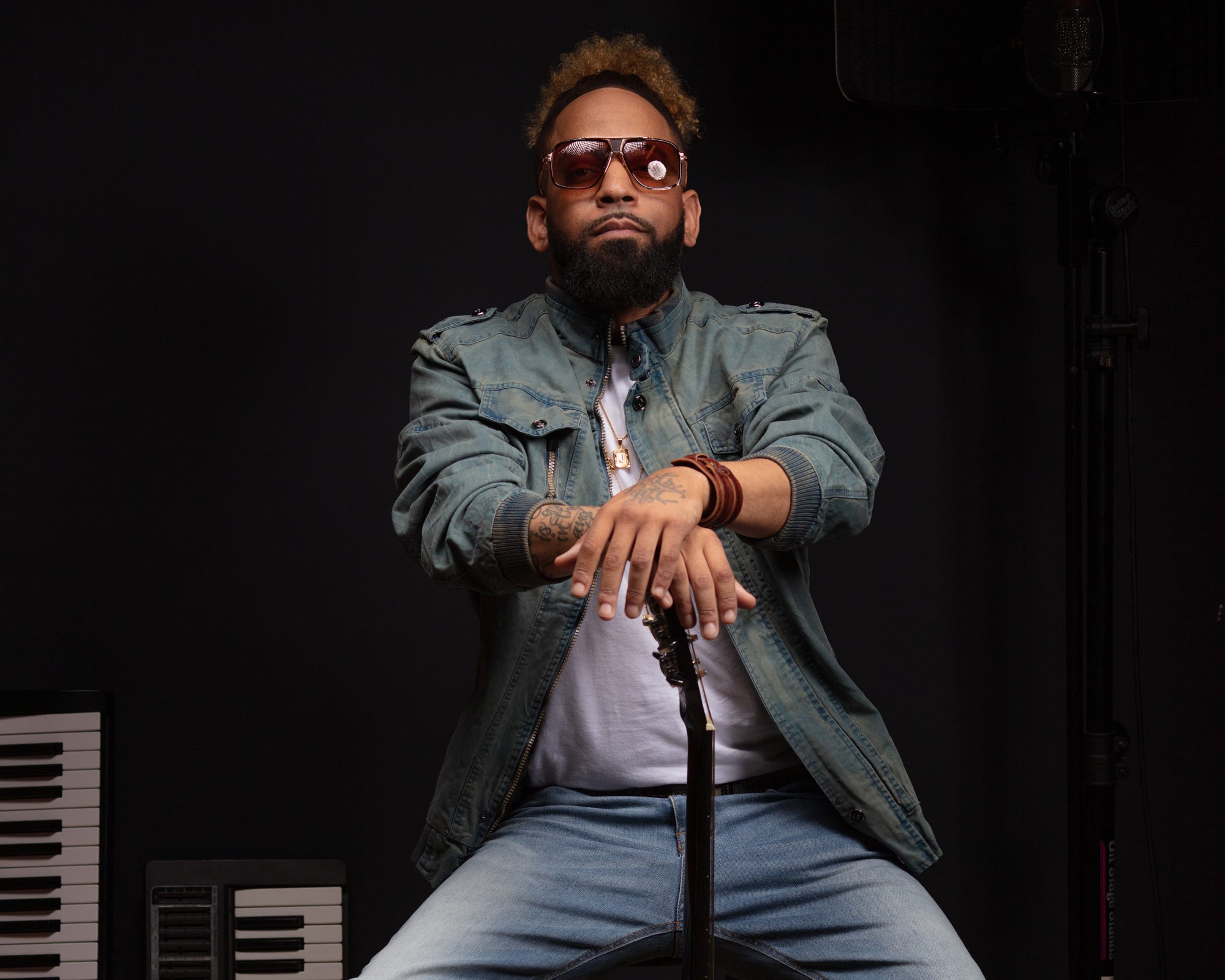
Born and raised in Washington, D.C., J. Holiday’s musical foundation was laid deep in the Black church—his mother was a preacher—and nurtured by the smooth, truth-telling sounds of legends like Marvin Gaye and Jodeci. He’d later call Gaye his main influence, an artist who was unafraid to blend the sacred with the profane, the social with the sensual. After an early attempt at group success with his trio, 295, Holiday’s distinctive voice and commitment to authentic R&B quickly set him apart. He signed with Capitol Records, and in 2007, he delivered his debut album, Back of My Lac’. He wasn’t chasing pop trends; he was simply carrying the torch of soul music with a streetwise swagger.
You can’t talk about the late 2000s R&B landscape without mentioning the tracks that put a definitive stamp on the era. “Bed,” the undeniable smash, was penned by The-Dream and produced by Los Da Mystro. This song was pure, distilled sensuality and was truly inescapable, peaking at #5 on the US Billboard Hot 100 and spending five consecutive weeks at #1 on the Hot R&B/Hip-Hop Songs chart. It was the song that made “slow-jam” a verb again. Following up on that success, “Suffocate,” showed his vocal depth and commitment to the classic R&B ballad structure, charting strongly and solidifying his presence. Later, “It’s Yours,” the lead single from his second album, Round 2, was another certified hit that continued to showcase his smooth, ladies’-man persona, proving his sound wasn’t a fluke.
His debut album, Back of My Lac’, went on to sell over 100,000 units in its first week—debuting at #5 on the Billboard 200 and #1 on the Top R&B/Hip-Hop Albums chart. It also earned a coveted Grammy Award nomination for Best Contemporary R&B Album in 2009. These accolades cemented him as a major player in the last golden age of male R&B crooners.
The casual listener remembers “Bed.” But the true R&B lover—the one who buys the physical album and reads the liner notes—knows the depth in his catalog. These are the tracks that prove his talent extended far beyond a radio hit. The album’s self-titled track, “Back of My Lac’,” is a raw, narrative-driven piece that tells his story of growing up, reflecting the “street soul” sound he aimed for, making it authentic and biographical. Then there is “Fallin’,” an incredibly vulnerable and earnest track from the same album, showcasing his vocal power and ability to convey genuine emotional complexity, a direct throwback to the R&B greats of the past. From his sophomore effort, “Forever Ain’t Enough” stands as a soulful, soaring declaration of commitment—the overlooked, wedding-song-quality ballad that highlights his mastery of vocal dynamics and romantic lyricism. Similarly, “Pimp In Me” perfectly embodies the confident, slick, and grown-man energy that R&B in that era excelled at with its smooth groove.
J. Holiday’s short-lived mainstream explosion and subsequent move to the independent sphere highlights a perpetual industry dilemma: maintaining artistic integrity versus chasing commercial success. He was one of the last male artists of his time to successfully champion that raw, mid-tempo, 2000s “swagger R&B” that was heavy on the vocal talent and unapologetic about its bedroom intentions. His presence, alongside contemporaries like Lloyd and Trey Songz, helped keep a very specific, masculine, and sophisticated brand of R&B alive just before the genre began its dramatic shift toward trap-soul and more experimental sounds. In an era where R&B felt increasingly blended with Pop, Holiday’s devotion to “Street Soul” provided a crucial bridge. His success proved there was a massive appetite for that soulful, grown-and-sexy music.
Today, as artists like Ari Lennox sing his praises and the nostalgia for 2000s R&B booms, J. Holiday’s influence on the sound of modern R&B is being re-evaluated and appreciated by a new generation. His career may have been an interruption rather than a marathon, but that brief moment was pure, unadulterated soul. For those in the know, the music never stopped.