

The Blueprint of Audacity: How Lil’ Kim Rewrote the Rules of Haute Couture
Discover how hip-hop icon Lil’ Kim and stylist Misa Hylton revolutionized haute couture, shattered fashion’s glass ceilings, and birthed the modern era of logomania.

To look upon the modern landscape of luxury fashion is to look at a world profoundly indebted to a singular, disruptive architecture. In the mid-nineties, the high-fashion establishment existed as an insular, pristine fortress of European elitism until Kimberly Jones arrived with a sledgehammer wrapped in pastel mink. Long before hip-hop was granted entry to the front rows of Paris or the steps of the Met Gala, Lil’ Kim was busy drafting the modern lexicon of the archetype we now take for granted: the musician as a high-editorial deity. It wasn’t a mere evolution of style; it was a cultural coup d’état. Alongside her legendary co-conspirator, stylist Misa Hylton, Kim weaponized hyper-femininity and street-level grit, transforming her own image into a canvas of high art and forcing a rigid industry to bend to her brilliant, audacious will.


Below, Azarian chronicles the definitive moments where Lil’ Kim shattered the glass ceiling, seamlessly married the grit of the streets with the glamour of the runway, and changed the landscape of fashion forever.
1. The Hard Core Awakening (1996)
The Creative Eye: Michael Lavine
The Visionary: Misa Hylton
The Occasion: Promotional poster for the debut studio album, Hard Core.
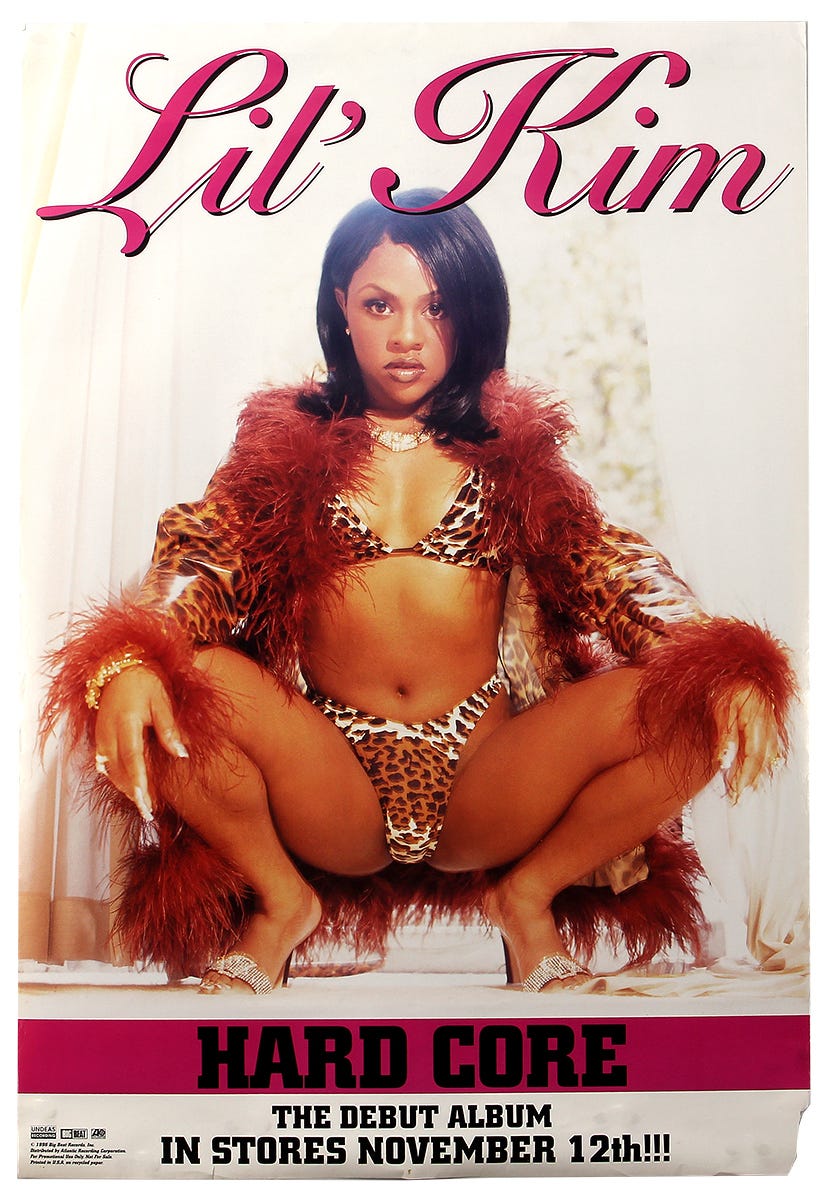
In the mid-1990s, the uniform for female emcees was heavily dictated by survival in a male-dominated arena: oversized hoodies, baggy denim, and utilitarian Timberland boots. Kim and Hylton chose a different weapon: total hyper-femininity. Draped in an opulent fur coat sliding off her shoulders, a leopard-print bikini, and sky-high heels, Kim stared directly into the lens in a bold, now-mythic squat.
This was a sartorial declaration of war against respectability politics. Kim proved that lyrical supremacy and overt, high-glamour sexuality could coexist. In a single frame, she birthed the sexually liberated, hyper-feminine rap archetype that directly paved the way for modern icons like Nicki Minaj, Cardi B, and Megan Thee Stallion.
2. The Intellectual Subversion: Paper Magazine (1997)
The Creative Eye: Christian Witkin
The Occasion: May 1997 Cover Story
Pairing hip-hop’s reigning monarch with the legendary feminist scholar and author bell hooks was a stroke of cultural genius. The visual identity of the shoot had to match the weight of the discourse. Reclined in a series of clean, razor-sharp, high-editorial frames, Kim exuded what could only be described as a polished, “ghetto-fabulous” sophistication.


The imagery bridged the gap between raw street poetry and high-brow intellectualism. By placing Kim’s style under the analytical gaze of bell hooks, the feature legitimized her wardrobe choices not as mere shock value, but as a deliberate, powerful manifestation of Black feminist agency.
3. The Genesis of Logomania: Interview Magazine (1999)
The Creative Eye: David LaChapelle
The Occasion: November 1999 Cover
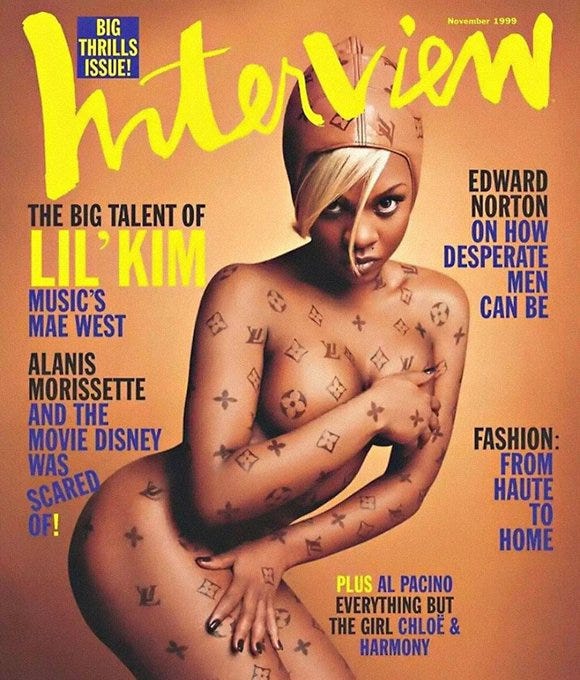
It remains one of the most provocative and influential fashion photographs of all time: Lil’ Kim, posing entirely nude, her body meticulously stenciled from head to toe in the iconic Louis Vuitton monogram.
At the time, European heritage houses routinely ignored or actively excluded hip-hop culture. In fact, Louis Vuitton initially slapped LaChapelle with a cease-and-desist letter—though they would ironically go on to purchase an edition of the print for their own permanent collection.
Kim effectively declared that the Black female body was the ultimate luxury item. This single image single-handedly catalyzed the luxury industry’s obsession with “logomania,” forcing European design houses to finally acknowledge, respect, and court hip-hop royalty.
       [ THE ARCHETYPE SHIFT ]
Streetwear/Timbs  ───►  Monogram Logomania  ───►  Global Luxury Face
  (Pre-1996)               (1999 Cover)             (Modern Era)
4. Surrealist Opulence: “The Bath” Portfolio (1999)
The Creative Eye: Markus Klinko
The Occasion: Editorial portfolio for Interview Magazine
While the cover sparked a cultural firestorm, the accompanying inside portfolio was a masterclass in high-budget, surrealist fashion imagery. The standout frame featured Kim submerged in a bathtub, practically dripping in millions of dollars worth of diamonds, framed by decadent soap bubbles and crowned in a futuristic, metallic-colored wig.
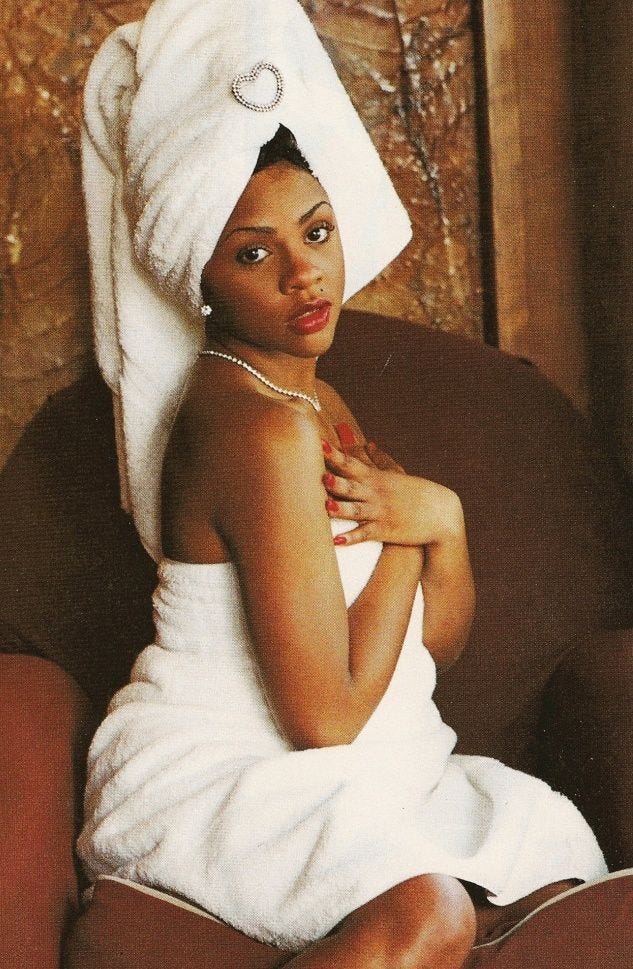
The shoot proved that a female rapper could occupy the exact same highly stylized, high-concept editorial spaces that had historically been reserved for elite supermodels like Naomi Campbell or Kate Moss. It elevated hip-hop styling into a literal museum-worthy art form.
5. The Living Icon: The Notorious K.I.M. (2000)
The Creative Eye: David LaChapelle
The Visionary: Misa Hylton-Brim
The Occasion: Album artwork for The Notorious K.I.M.
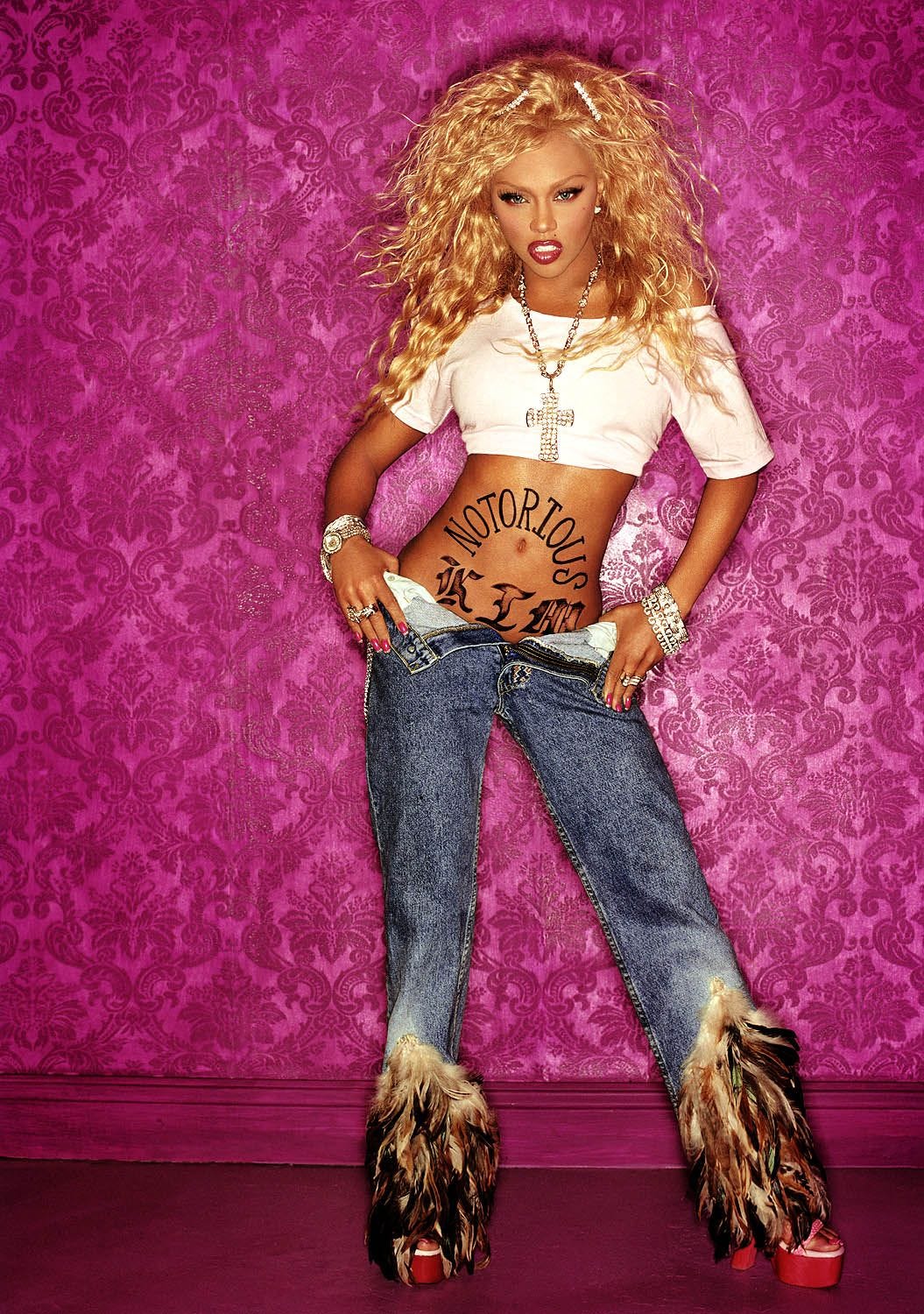
When Interview snagged the Louis Vuitton stencil photo for their cover, LaChapelle and Kim returned to the studio to create something even more theatrical. Against a blinding neon-pink backdrop, Kim crossed her arms with an icy blonde wig, razor-sharp contouring, and futuristic makeup. The inside booklet leaned entirely into a high-fashion “Black Barbie” concept, complete with custom designer wardrobe and heavy extensions of Jacob the Jeweler ice.
It solidified the concept of the female rapper as a living, breathing doll—an unattainable icon of manufactured perfection. Every doll-themed rap era that followed draws its lineage directly from this visual masterwork.
6. Satire as Fine Art: “The Blow-Up Doll” (2000)
The Creative Eye: David LaChapelle
The Occasion: Conceptual fine art exhibition
In another brilliant collaboration with LaChapelle, Kim was styled inside a giant, life-sized toy box, styled to look exactly like a glossy, synthetic plastic blow-up doll.
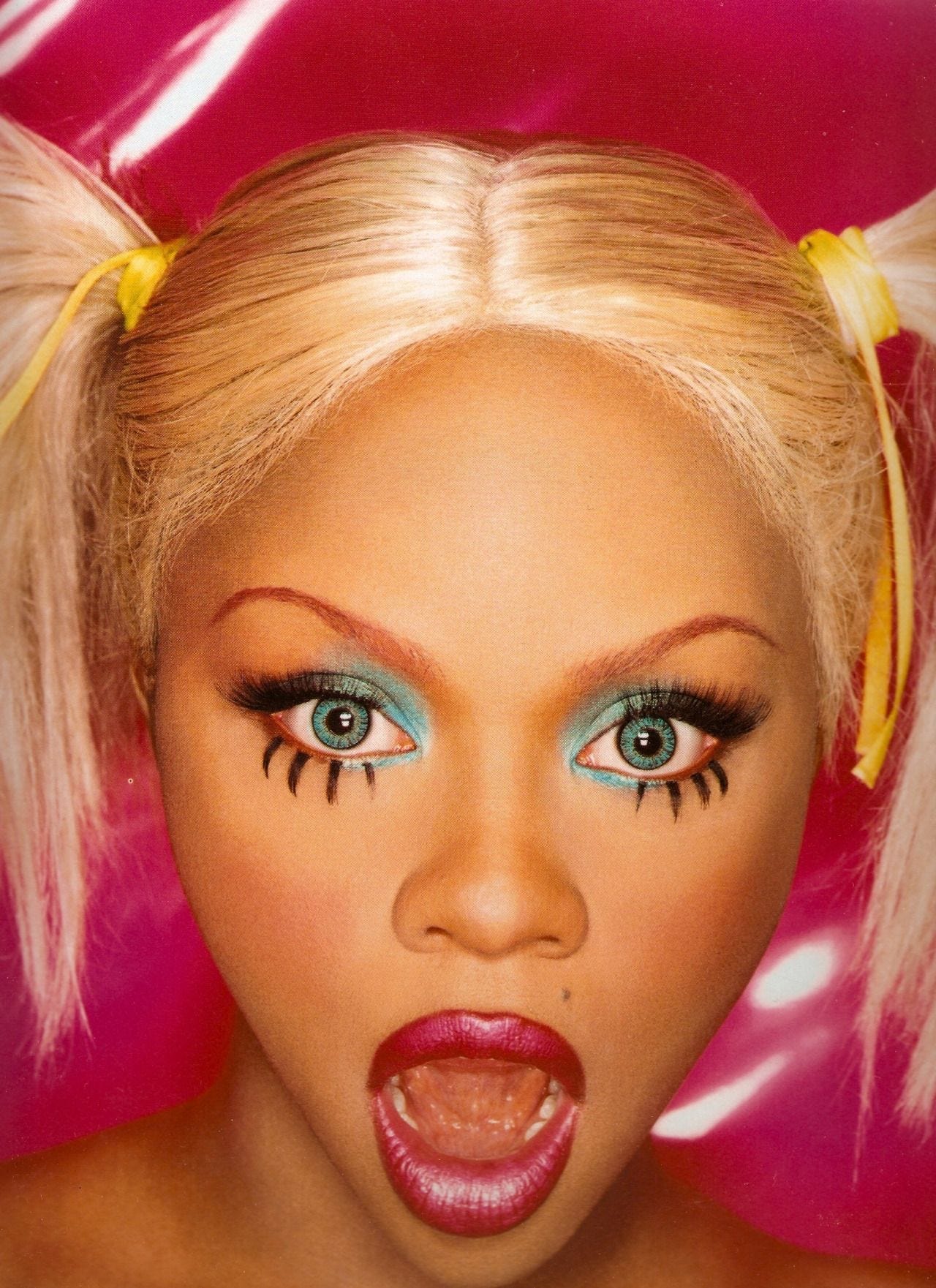
This was pure, high-art satire. Rather than allowing the media to objectify her body and reduce her to a caricature, Kim chose to caricature herself first. By transforming her image into pop art, she seized control of the narrative, demonstrating that hip-hop stars could utilize fashion as a tool for highly sophisticated social commentary.
7. Rewriting Respectability: Essence Magazine (2000)
The Creative Eye: Timothy White
The Visionary: Misa Hylton-Brim
The Occasion: October 2000 Cover Feature
Titled “The Big Problem with Lil’ Kim,” this editorial deliberately juxtaposed classic, high-end luxury styling—think sweeping mink furs, sharply tailored power suits, and timeless diamonds—with the sex-positive image Kim had popularized.
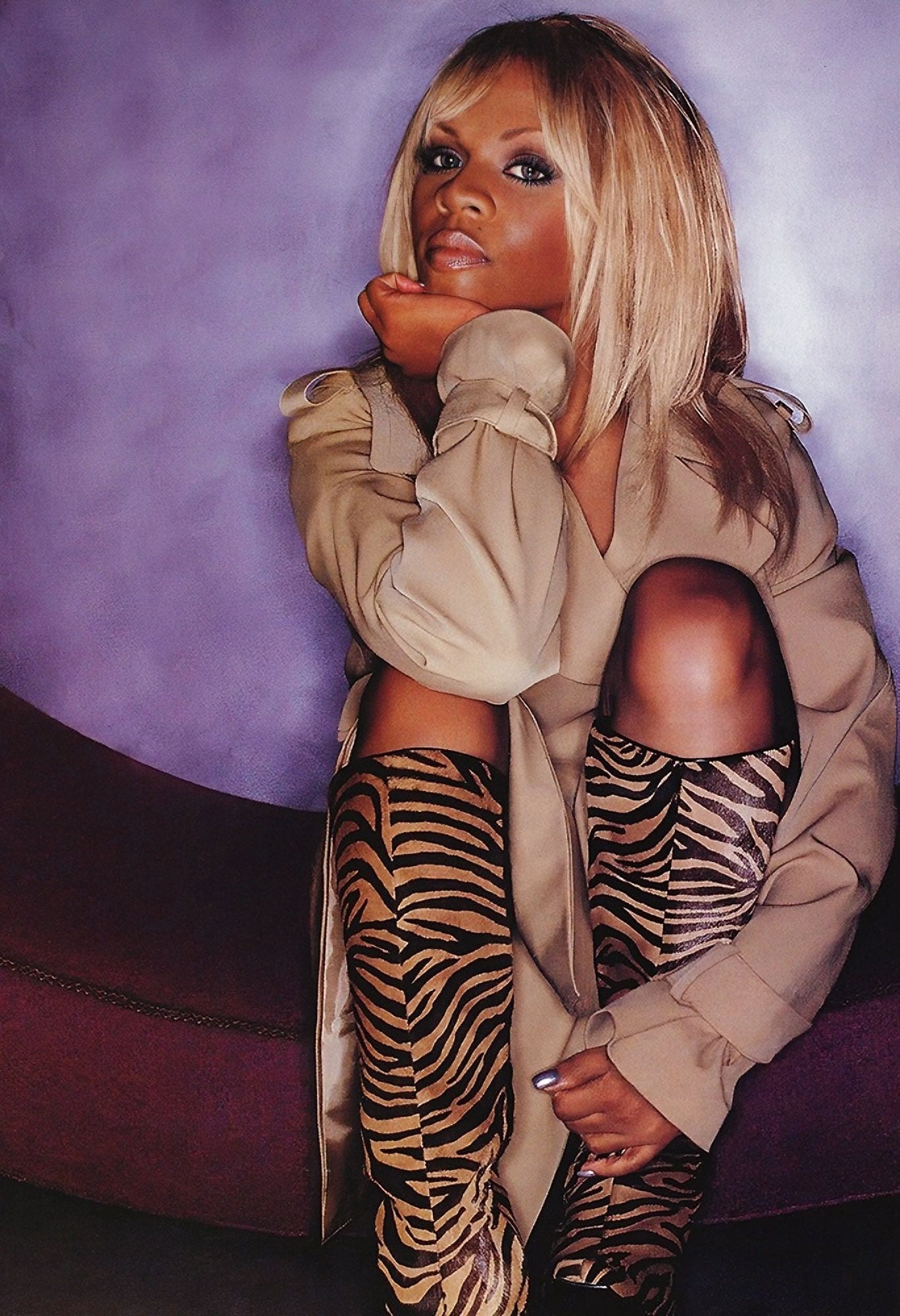
Essence was traditionally a more conservative publication for Black women. Placing Kim on the cover in such an elegant, high-glam context forced a crucial dialogue regarding respectability politics. It asserted a new truth: a woman did not need to dress modestly to be recognized as powerful, elegant, and worthy of reverence.
8. The Corporate Frontier: Chevrolet (2002)
The Creative Eye: Martin Schoeller
The Occasion: Chevrolet “Rock & Roll” National Campaign
Captured in a custom, head-to-toe patchwork denim set—complete with denim-wrapped boots and an exaggerated, oversized hat—Kim posed alongside a luxury SUV.
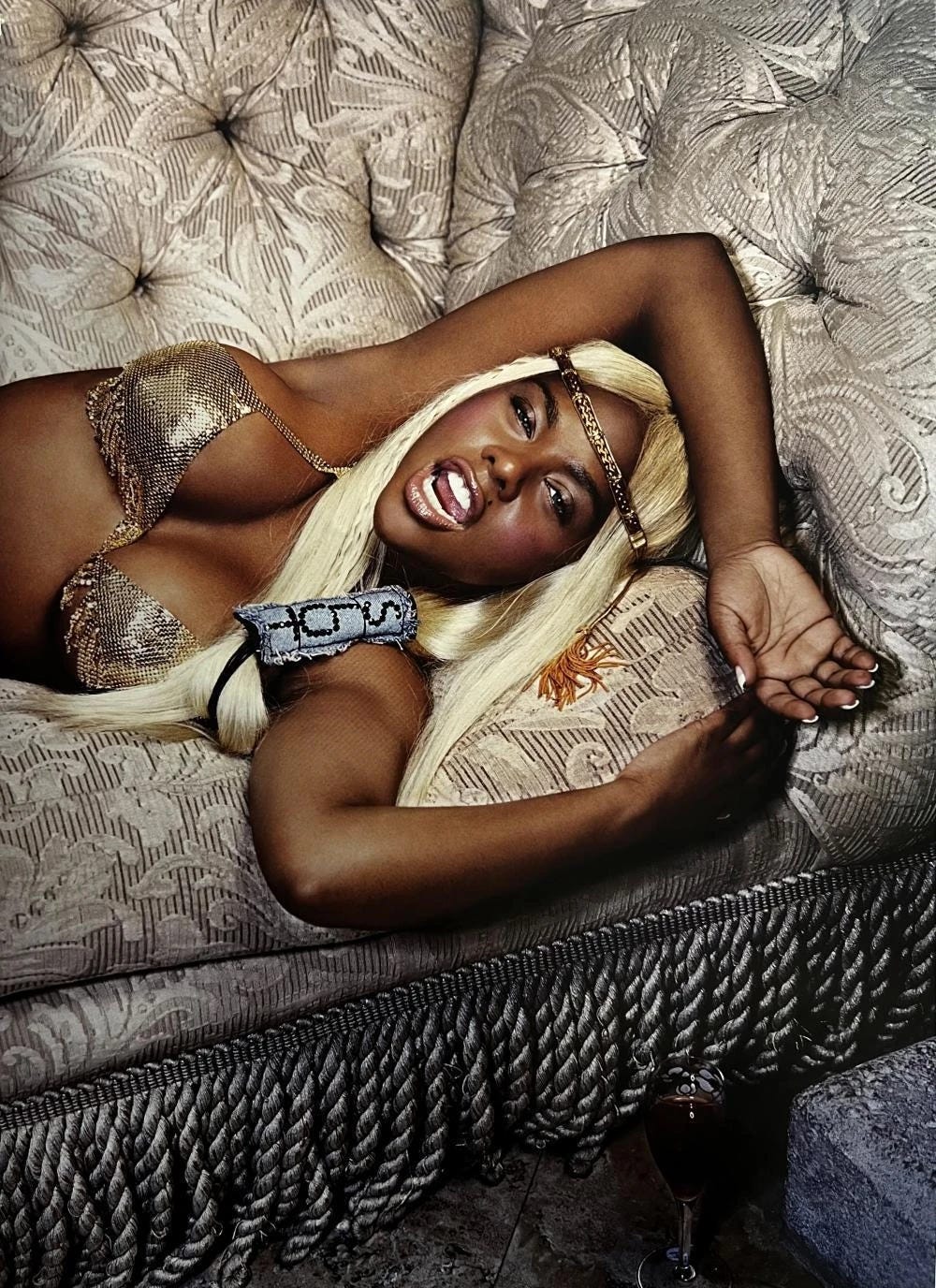
Before this moment, corporate America steered completely clear of explicitly subversively sexual hip-hop stars. Chevrolet leaning heavily into Kim’s distinct aesthetic proved that her style was no longer just subculture cool—it was a highly lucrative corporate asset. She effectively set the stage for hip-hop artists becoming the primary marketing vehicles for global consumer industries.
9. The Ultimate Gilded Validation: Marc Jacobs (2005)
The Creative Eye: Juergen Teller
The Occasion: Global Fall/Winter 2005 Ad Campaign
After forming a close, authentic friendship with Marc Jacobs (who was simultaneously helming Louis Vuitton), Kim was chosen to front his namesake brand’s global campaign. Shot by Juergen Teller in his signature raw, stripped-back, minimalist style, Kim appeared with virtually no makeup, natural hair, and understated clothing, quietly holding Marc Jacobs accessories.
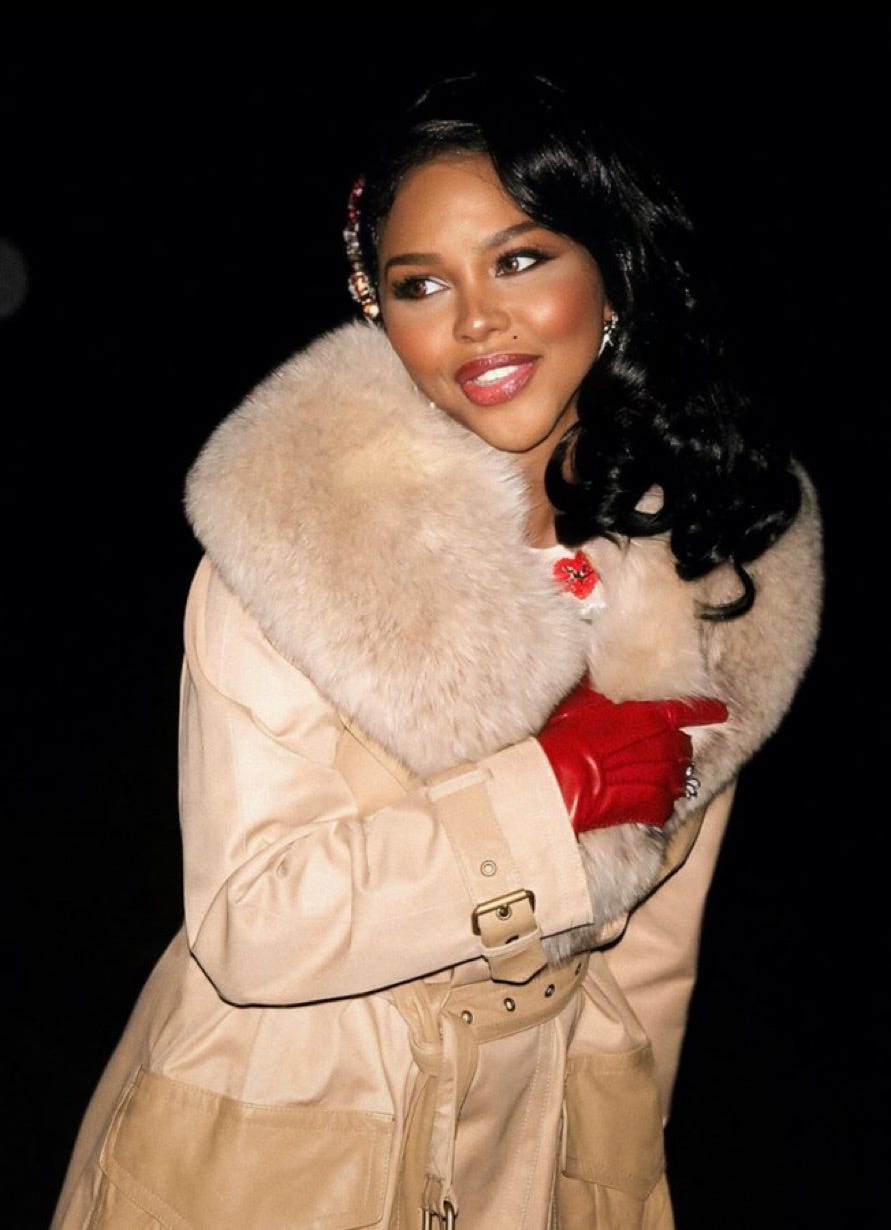
This was a monumental milestone. Lil’ Kim became one of the first-ever female rappers to be the face of an elite global luxury fashion house. Teller’s lens showed the world that Kim didn’t need the wigs or the glitter to command a room—her sheer presence was haute couture. This shattered the final glass ceiling, paving a direct path for Rihanna at Dior, Cardi B at Balenciaga, and A$AP Rocky at Bottega Veneta.
10. The Eternal Return: MACKAGE (2022)
The Creative Eye: Drew Vickers
The Occasion: Global Fall/Winter Monogram Campaign
Decades after she first introduced the concept of logomania to the mainstream, Kim returned to the spotlight for luxury outerwear brand Mackage. Wearing a second-skin monogrammed catsuit, towering platform boots, and sleek, wet-look hair, the imagery was striking, modern, and deeply nostalgic.
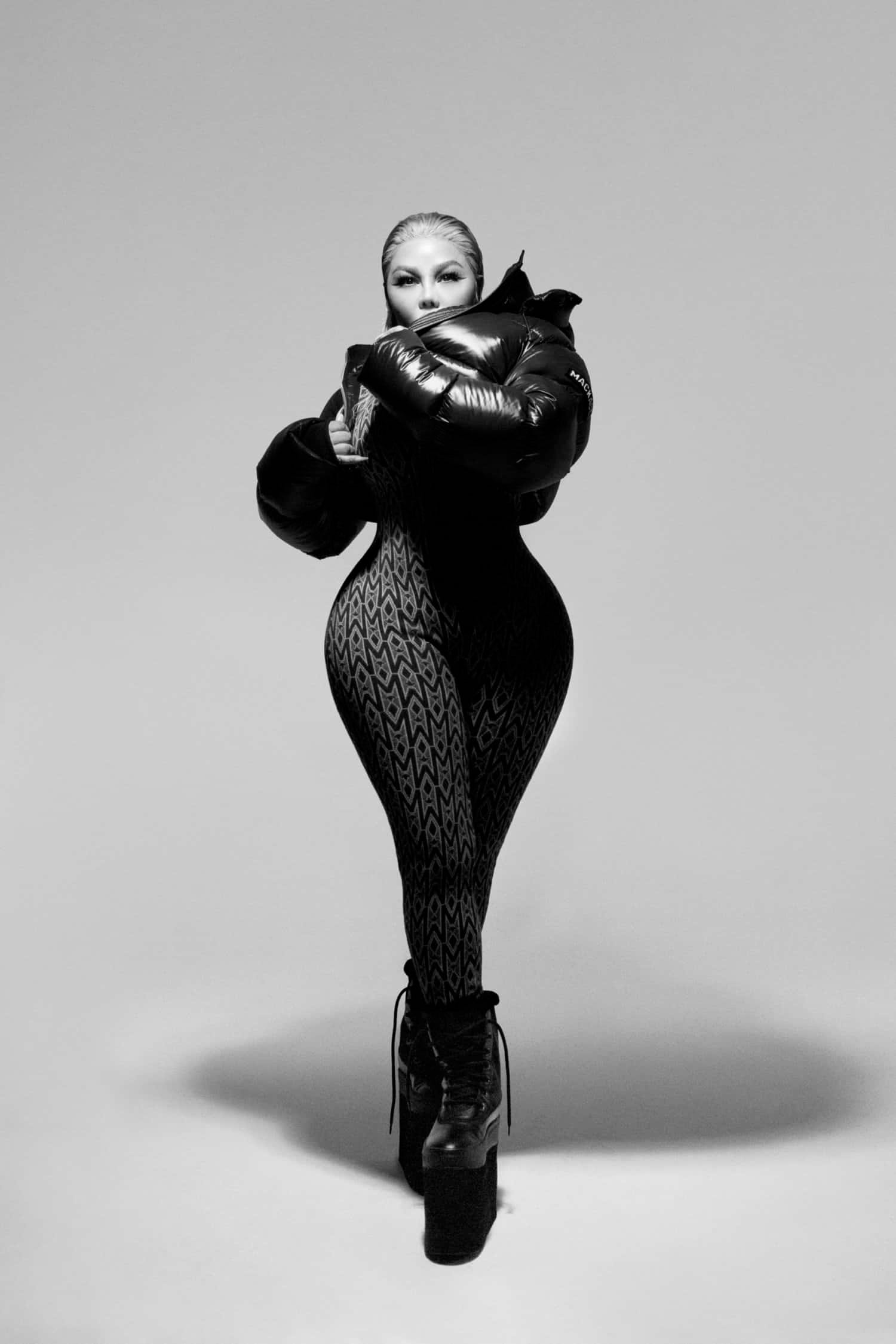
This campaign served as a beautiful, full-circle tribute to her legacy. It proved that the very body-conscious, dramatic, logo-heavy aesthetic that Kim championed in the nineties has officially become the timeless, enduring standard for modern luxury. Kim does not follow the trend cycle—she owns it.


Ultimately, the true measure of a fashion revolutionary lies not merely in the trends they ignite, but in the taboos they render completely obsolete. Today, as heritage design houses scramble to capture the raw, lucrative energy of hip-hop culture, they are doing little more than tracing the brilliant chalk lines Lil’ Kim left on the cultural pavement decades ago. Every monogrammed catsuit on a Parisian runway, every subversion of respectability politics in pop iconography, and every unapologetic display of autonomous female glamour owes its breath to her initial fearlessness. Kim never petitioned the gatekeepers for a seat at the table; she simply built her own throne out of custom wigs and diamond bubbles. As the style world continues to spin on an axis she helped forge, one truth remains beautifully absolute: trends are entirely temporary, but absolute audacity is eternal.