

Voodoo Child Uncaged: Revisiting the Seismic Genius of Jimi Hendrix
From Seattle to Woodstock: The sonic journey that turned feedback and distortion into the most powerful musical language of the 20th century.

Jimi Hendrix was not merely a guitarist; he was a sonic architect. Bursting onto the international stage in the mid-1960s, he single-handedly revolutionized the electric guitar, turning noise—feedback, distortion, and sustain—into a language of boundless emotional and musical possibility. The influence of his debut album, Are You Experienced (1967), was immediate, offering “explosive, fast-paced blues-based riffs, overdriven amplifiers with high gain and treble to achieve guitar feedback (previously avoided by),” forever setting the template for rock guitar.
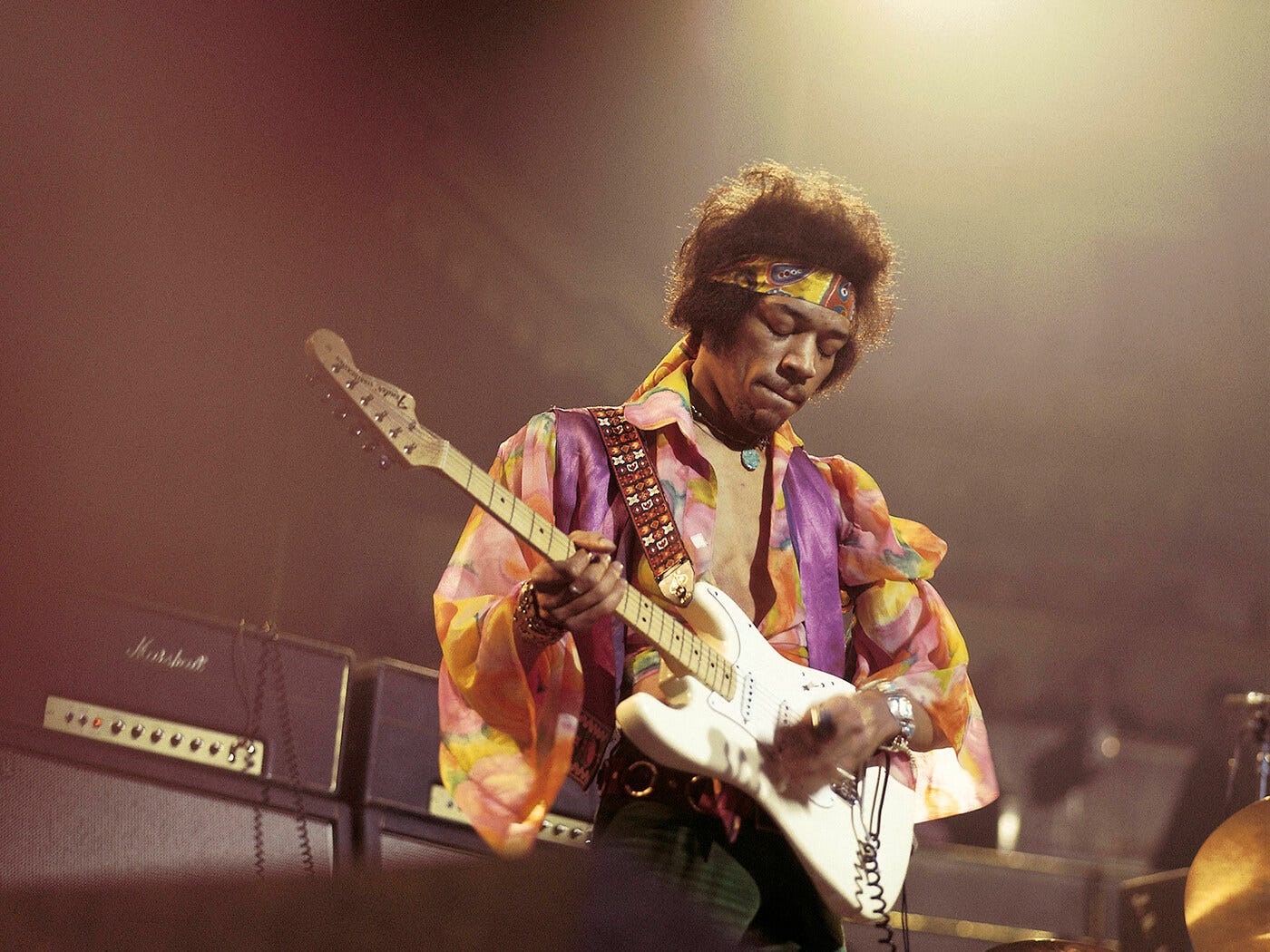
Hendrix’s legendary performance of “The Star-Spangled Banner” at Woodstock in 1969 remains his most profound artistic statement and an essential case study in rock’s role as social commentary. Through a searing, distorted lens, he transformed the national anthem into a visceral depiction of the ongoing Vietnam War and the racial turmoil plaguing the country. He used his music “to protest, but not in a distasteful way. He was being honest and truthful about the position the country was in,” magnifying the nation’s conflict without uttering a single political word.
While Jimi Hendrix was marketed primarily to a white rock audience, his roots and contributions are intrinsically woven into the DNA of Black music. Before The Jimi Hendrix Experience, he honed his craft as a sideman, grinding out gigs on the “chitlin’ circuit” with giants like Little Richard, Sam Cooke, and The Isley Brothers. This apprenticeship left an indelible stamp of R&B and soul on his work.
Journalists have noted a “stigma” attached to Black listeners who gravitated toward his music during the Black Power movement, viewing it as “’white people music’” instead of the soul, Motown, and James Brown of the time. Yet, his discography is rich with Black music’s heritage, blending the smooth R&B of “Have You Ever Been (To Electric Ladyland)” with the syncopations of funk in tracks like “Fire” and “Freedom.” He was also one of the first to fuse the new “loud blues” rock with funk, leading the way for future Black rock artists such as Prince, Lenny Kravitz, and the pioneers of Parliament-Funkadelic. The fact that he was involved in one of the first “free rap” recordings, “Doriella Du Fontaine” (with Last Poets member Lightnin’ Rod), shows his continuous push beyond genre boundaries.
Hendrix’s genius lay in his ability to take other people’s songs and turn them into something uniquely his own, most famously with his definitive cover of Bob Dylan’s “All Along the Watchtower.” His original compositions, however, are the foundation of his immortal legacy. His most famous songs include “Purple Haze,” “Voodoo Child (Slight Return),” “Hey Joe,” “Foxy Lady,” “The Wind Cries Mary,” and “Little Wing.”
His recording sessions were often electric jams that led to legendary tracks. “Voodoo Child,” the 15-minute blues epic, was born from a studio session with Jack Casady (Jefferson Airplane) on bass and Steve Winwood (Traffic) on organ. His final iconic group, Band of Gypsys, featuring Black musicians Billy Cox on bass and Buddy Miles on drums, pushed his sound deep into funk and soul-rock, exemplified by the masterful anti-war epic, “Machine Gun.”
The technical and personal life of Jimi Hendrix is as compelling as his music, revealing a man obsessed with his craft. As his friend Billy Cox was quoted, “Jimi put 25 years of guitar practice into 5 years,” often falling asleep with his guitar.
A few things people may not have known include the fact that Hendrix served as a paratrooper in the U.S. Army’s 101st Airborne Division, a far cry from the psychedelic image he projected. He was honorably discharged after a brief stint. Furthermore, his very first instrument was a one-stringed ukulele, which he taught himself to play by ear, mastering Elvis Presley songs before he owned a proper guitar. Finally, by his third album, Electric Ladyland, Hendrix was effectively producing his own work, creating sprawling, ambitious tracks like “1983 (A Merman I Should Turn To Be)” that showcase his studio mastery, using backward guitar and innovative effects to achieve a uniquely psychedelic sound.
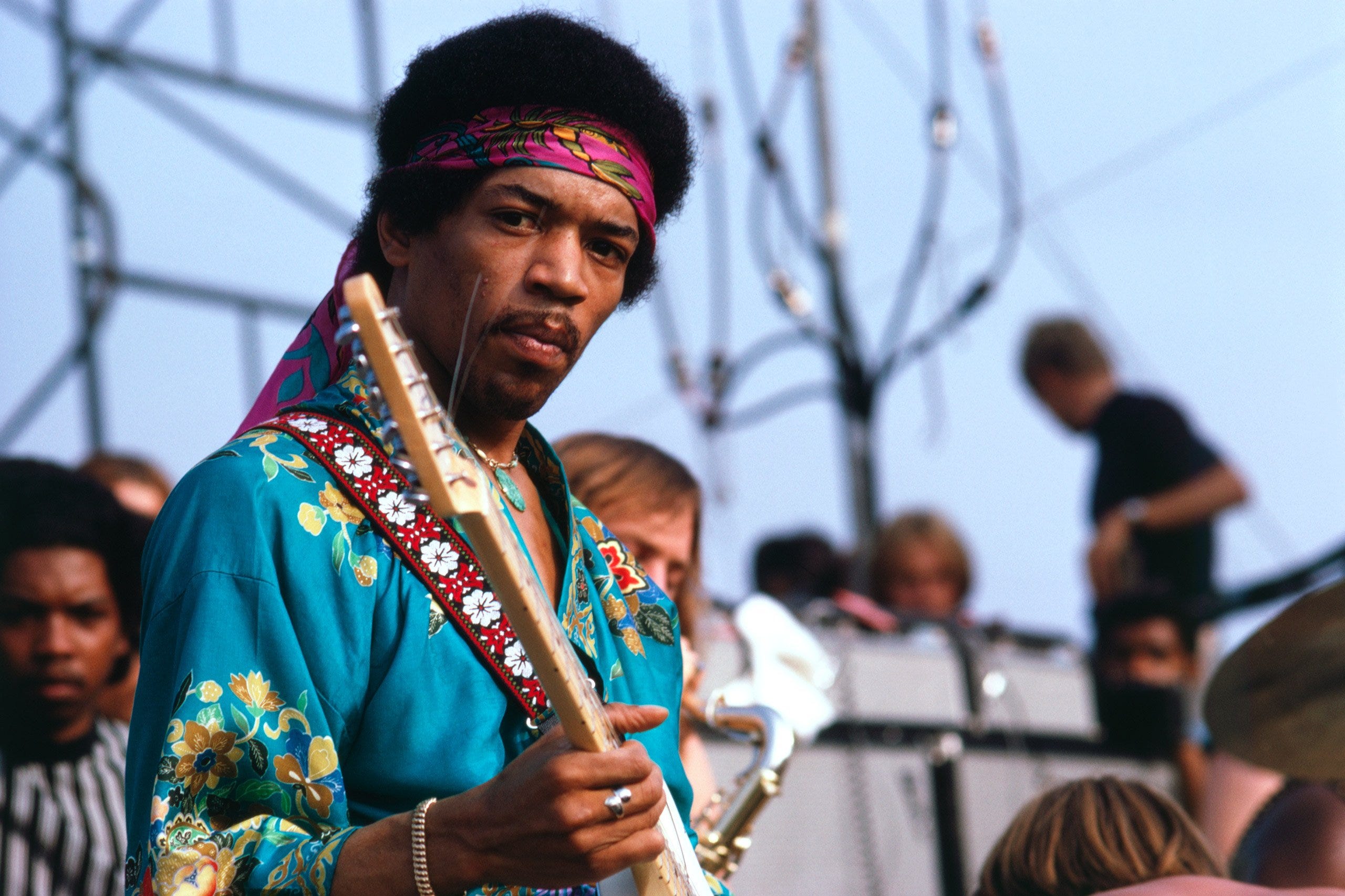
Jimi Hendrix’s brief, blazing career cemented his status as the most inventive and technically gifted guitarist in rock history. His ability to fuse the blues bedrock with R&B/soul rhythms and groundbreaking psychedelic rock techniques ensures that his electric soul continues to resonate across all musical genres.
🙌🏿🙏🏿🕊️🔥❤️💕💃🏽🎶☀️